
Major or serious burns can be among the most complex injuries in personal injury and workers’ compensation and are almost always impossible to assess on the papers alone. While burns can be described in terms of total body surface area, the depth of the burn is equally important, and the nature of the healing and scarring often determines the functional implications over the long term. This is the driver of any permanent impairment or ongoing disability.
The total body surface area of a burn certainly matters, but it matters most for diagnostics and treatment, and it answers a different question from the one a solicitor or insurer is asking when they look at quantum. The total body surface area of a burn does not directly equate to the degree of permanent impairment.
What total body surface area actually measures
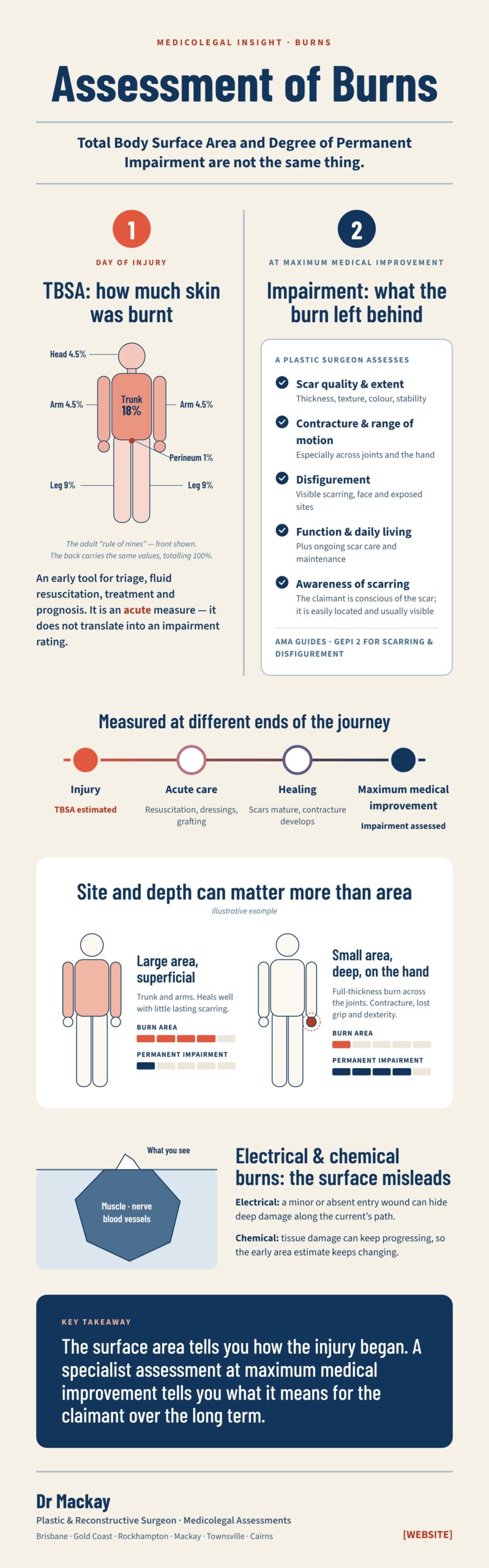
Total body surface area is a way of estimating the proportion of the body that has been burnt, usually calculated at the time of injury using a tool such as the “rule of nines” or the Lund-Browder chart. It is an acute measure. It guides emergency resuscitation and treatment and, to some extent, prognosis. In the early period, fluid replacement and treatment is essential and life-saving in major burns and this is in part managed with TBSA in mind.
What total body surface area cannot do is describe the ultimate consequences, or the degree of permanent impairment. Much of the burnt surface area may be superficial and heal without any lasting impairment. On occasion, a small but very deep burn in a critical area such as the hand, the face, or across a joint can cause a degree of permanent impairment that seems disproportionate to the percentage of body surface area involved.
This is the central point for legal and non-medical readers: the acute body surface area of a burn and the impairment assessment are not the same thing, and one cannot be used to estimate or interpret the other.
Permanent impairment assessment is performed at the end of the treatment pathway, following maximum medical improvement, on the basis of the residual scarring, disfigurement, contracture and functional loss. The site and depth of the burn may matter more than the area.
Why electrical and chemical burns are special
There can be an apparent gap between the perceived injury and the true severity of the burn, and this gap can be wide in electrical and chemical injuries. An electrical injury can present modestly, sometimes with no visible entry or exit wound, while causing deep damage along the path of the current to muscle, nerve and blood vessels. That damage can be initially invisible to surface inspection. The visible burn may appear minimal, yet the impairment can be severe where neurological structures in particular are involved and in these cases the percentage of total body surface area can be all but irrelevant.
Chemical burns behave differently again. Tissue damage can progress over time, so that the initial estimate of surface-area involvement continues to evolve. In both cases the total body surface area is unreliable at the outset, and the burns and their physical effects change over time.
Scarring, disfigurement and the psychological dimension
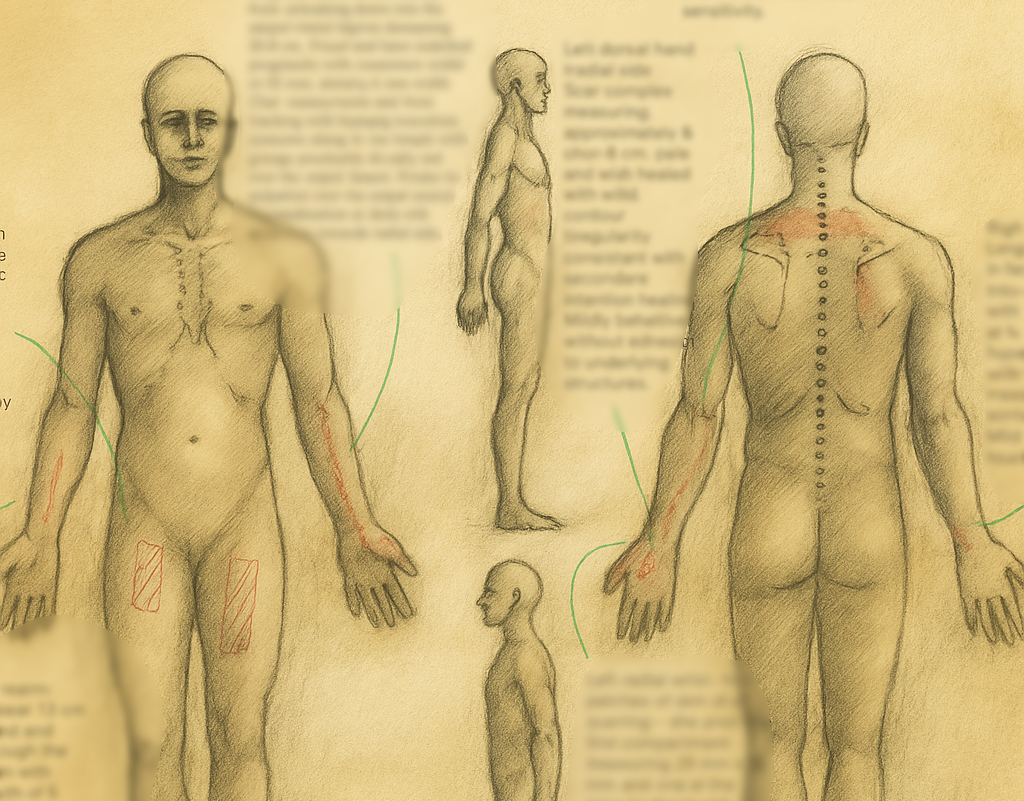
Once at maximum medical improvement, a burns impairment assessment considers several overlapping dimensions. The nature, extent and quality of the scarring is assessed. The functional impact of scarring and contracture on movement, particularly around joints and in areas such as the hand, is assessed. There is consideration of the degree of disfigurement and any ongoing burden of care and maintenance. Other systemic consequences, neurological features and symptoms are also assessed.
Major burns and severe scarring carry a genuine psychological as well as physical burden. A thorough assessment takes into account the proper and reasonable psychological effect of the burn, and distinguishes this from secondary psychological injury. In other words, there is a degree of concern and self-awareness about disfiguring burns that is a reasonable response to the burn itself and there is a dysfunctional or pathological psychological reaction, which is better assessed by psychiatric experts. Drawing that distinction benefits from specialist assessment, particularly that of a plastic and reconstructive surgeon familiar with the complexities of scarring and disfigurement.
What this means for legal and claims professionals
The most common error is anchoring expectations about permanent impairment to the total body surface area. The more accurate and defensible position is to rely on specialist assessment by a plastic and reconstructive surgeon at the time of maximum medical improvement, examining all residual scarring, contracture, functional loss and symptoms. Any permanent impairment assessment applies the methodology of the AMA Guides, together with other tools such as GEPI 2 for scarring and disfigurement, alongside the assessment of functional impairment.
Instructing the assessment at the right stage matters both for guiding the treatment pathway and for assessing permanent impairment at the right time. Choosing an examiner with experience in plastic and reconstructive surgery gives the most stable foundation for decisions about causation, future treatment, quantum and the long-term effect of the burns, scarring and disfigurement.
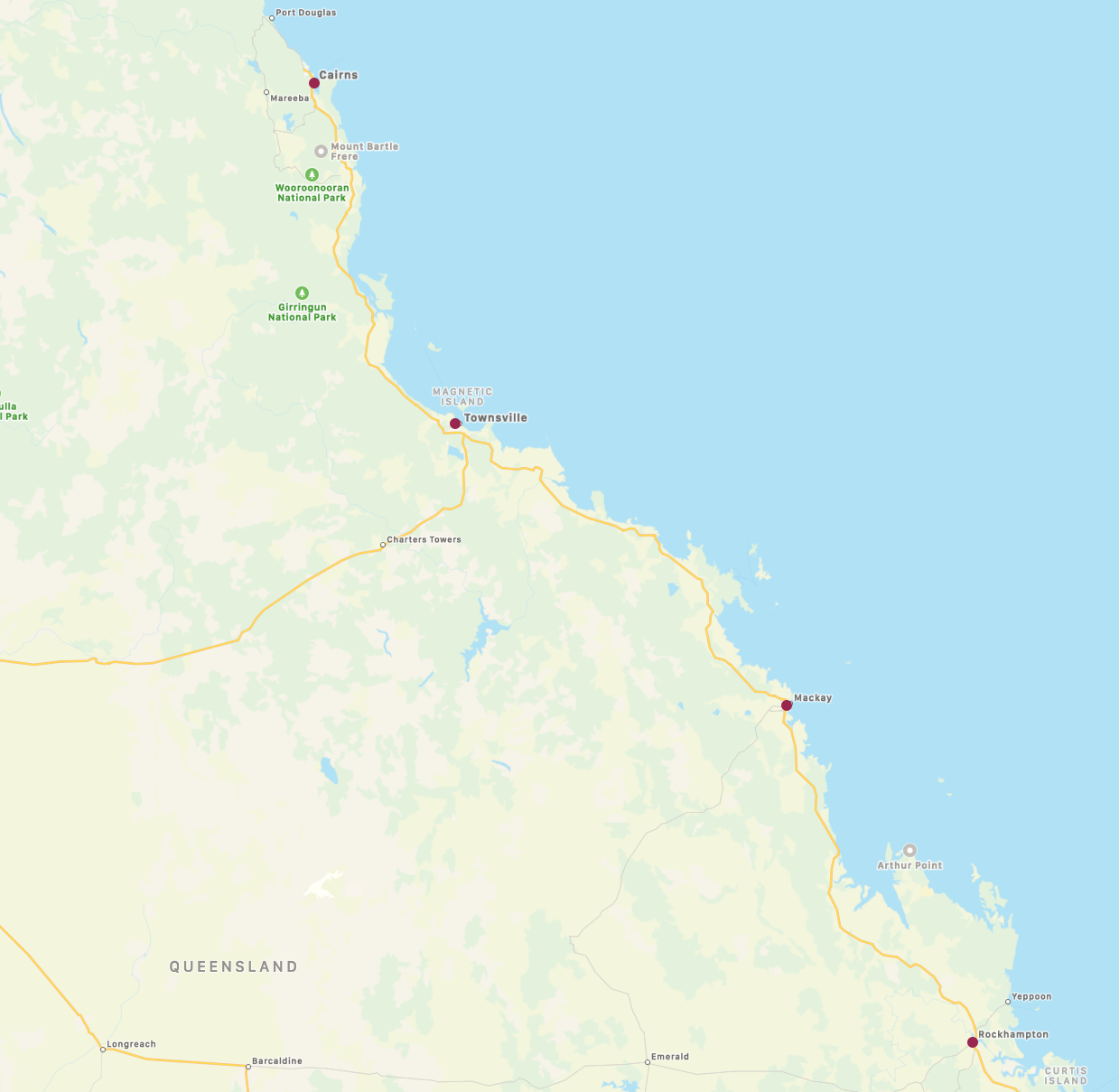
Serious electrical, chemical and thermal burns arise regularly in the mining, agriculture, manufacturing and heavy-industry workplaces of Central and regional Queensland. For claims in centres such as Rockhampton, Mackay, Townsville and Cairns, access to a specialist plastic and reconstructive surgeon for local scarring, disfigurement and permanent impairment assessment reduces delay and the travel burden that serious burn injuries make especially difficult.
Key takeaway
The percentage of body surface area affected by a burn is an early tool for triage, treatment and prognosis, but it does not translate into an impairment rating. In electrical and chemical injuries, the early picture can continue to evolve, and the burn can be far more severe than what is first seen on the surface. For all burns, permanent impairment must be assessed at maximum medical improvement, taking into account all residual scarring, disfigurement and functional consequences. The surface area tells you how the injury began; a specialist assessment at the end of the claim tells you what it costs, and what it means to the claimant over the long term.
Dr Mackay is a fully trained plastic and reconstructive surgeon with particular expertise in the assessment of whole-body scarring and disfigurement, conducting assessments in Brisbane and the Gold Coast and at regional clinics in Rockhampton, Mackay, Townsville and Cairns. To discuss a matter or request an assessment, contact the rooms.
Related reading: Assessment of scarring after trauma and surgery · Assessment of scarring: art or science